 Based on 300+ Reviews!
The First Cold Night Brings a Quiet Worry
You flip the thermostat to heat. The furnace clicks, hums, and puts out that dusty first-of-the-season smell. Then a thought creeps in. That furnace is 15, maybe 20 years old. Is it still safe to run while your family sleeps?
Sound familiar? You’re not alone. Many homeowners in Central Mississippi have heard the phrase “cracked heat exchanger” and know it has something to do with carbon monoxide. That’s about all they know. And not knowing is the worst part.
Here’s the good news. Smart furnace maintenance takes most of the guesswork out. In this guide, you’ll learn how heat exchangers crack, which warning signs matter, what a real safety check covers, and how to decide between repair and replacement without getting pushed into either one.
What’s Really Happening Inside Your Furnace?
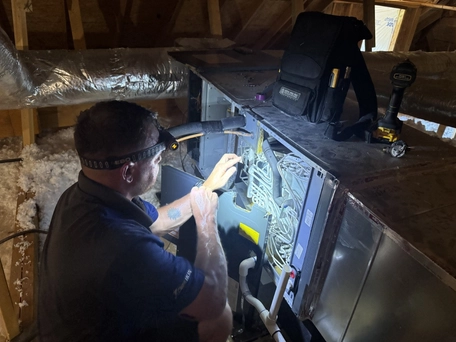
Think of the heat exchanger as a metal wall. Fire and exhaust stay on one side. The air you breathe passes over the other side and picks up heat. As long as that wall is solid, the exhaust goes up the flue and out of your home.
The trouble starts when the metal wears out.
Heat, Cool, Repeat: How the Metal Gets Tired
Every cycle heats the metal and lets it cool. It expands and shrinks, over and over, for years. Most cracks form at bends and seams where that stress builds up. A dirty filter makes it worse. Less airflow means the metal runs hotter than it was built to handle.
The Mississippi Twist Most Guides Miss
Here’s the thing. In a lot of Rankin and Madison County homes, the air conditioner’s indoor coil sits right on top of the furnace. All summer long, that coil drips water into a drain pan. If the pan cracks or the drain clogs, water can drip down onto the furnace.
So your furnace might rust out in July, not January. That’s why a heating check in our area should always look at the AC drain and pan, too.
The flip side? Our heating season is short. A 20-year-old furnace in Pearl may have fewer run hours than a 10-year-old one up north. Age matters, but it’s not the whole story.
Warning Signs You Can Spot Without a Toolbox
You can’t see a heat exchanger without taking the furnace apart. But your home drops hints. Some are true emergencies. Others just mean it’s time to call for service.
| What you notice | What it may point to | How fast to act |
|---|---|---|
| CO alarm goes off | Exhaust leaking into the home | Get everyone outside now. Call 911 or your gas company. |
| Headaches, nausea, or dizziness that ease when you leave the house | Possible carbon monoxide exposure | Leave, get fresh air, and see a doctor. Then call a pro. |
| Yellow, lazy, or dancing burner flames | Poor combustion or air mixing with the flame | Turn it off and schedule service soon. |
| Black soot near the furnace or vents | Incomplete burning of gas | Schedule service soon. |
| Rust or water on top of the furnace | AC coil or drain pan leaking onto it | Schedule service this week. |
| Furnace starts, then shuts off over and over | A safety switch tripping from overheating | Schedule service this week. |
| Burning-dust smell on the first cold day that fades within an hour | Normal burn-off after months of sitting | No action needed. |
Look, that last row matters. Lots of folks panic over the first-day smell. It’s usually just dust.
The exception is a smell that doesn’t fade, or one that smells like rotten eggs. That points to a gas leak. Leave the house and call your gas company from outside.
One more thing. Every home with a gas furnace needs working CO alarms on each floor and near bedrooms. A good tune-up lowers your risk. An alarm watches the other 364 days of the year.
What Good Furnace Maintenance Actually Checks
Not every tune-up is equal. Some are a filter swap and a quick look. On an older gas furnace, that’s not enough.
The Numbers That Tell the Truth
A thorough visit measures things, not just looks at them. Temperature rise is a big one. It’s how much warmer the air leaving the furnace is than the air going in. If it runs higher than the range printed on the furnace label, the heat exchanger is running too hot. That’s the stress that leads to cracks.
Airflow, inducer motor amperage, the igniter, and the flame sensor all get checked, too. Each one tells part of the story about how hard your furnace is working.
The fall check in the Climate Masters maintenance agreement covers all of these. It also checks the attic pan and drain and cleans sludge from the coil pan. Remember that Mississippi twist? That’s the step that catches it.
Ask to See What the Tech Sees
Here’s what matters most if someone says your heat exchanger is cracked. Ask for proof. A photo, a camera view, or a high CO reading should back up the claim.
An honest tech will gladly show you. A real crack is a serious safety problem, and most pros will shut the furnace off. But you deserve to see it before you sign for a new system. At Climate Masters, straight answers are part of the job.
Repair or Replace? An Honest Way to Decide
You might feel overwhelmed here. Nobody wants to throw money at an old furnace. Nobody wants to buy a new one too soon, either.
Most gas furnaces last about 15 to 20 years. But age alone shouldn’t make the call. A well-kept furnace with low run hours can keep going safely. A neglected one can fail early.
When Repair Makes Sense
Worn parts like igniters, flame sensors, and inducer motors are common fixes. If the heat exchanger is solid and the repair costs a small slice of a new system, furnace repair is often the smart move. You get more years from the furnace you already paid for.
When It’s Time to Let Go
A confirmed cracked heat exchanger changes things. On an older furnace, replacing that part often costs close to a new unit once you add labor. And the parts warranty may have run out long ago.
That’s usually when furnace replacement wins. The exception is a newer furnace still under its parts warranty. In that case, a heat exchanger swap can be worth it.
Worried about the cost? Financing options can spread it out, so a safety fix doesn’t have to wait.
Why the Same Tech, Year After Year, Makes You Safer
Here’s something most furnace articles skip. The best safety tool isn’t a gadget. It’s a tech who has seen your furnace before.
When the same person checks your system each fall, they notice change. A temperature rise that crept up. A new rust spot. A flame that looks a little off compared to last year. One visit gives a snapshot. Years of visits show a trend.
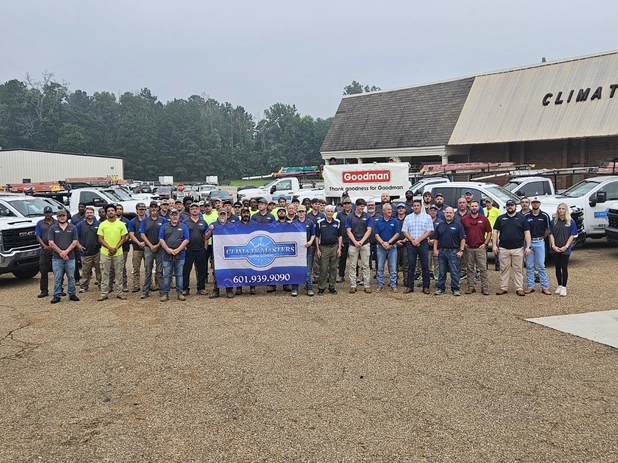
That’s the idea behind how Climate Masters works. The team in Pearl has done heating and air, and only heating and air, for Central Mississippi homes since 1975. Some customers have stuck with them for more than 30 years. In reviews, people name their techs, like Kevin, who caught a condenser problem during a routine maintenance visit before summer hit.
You can meet the team before anyone steps into your home. For an older furnace, that kind of relief is worth a lot.
Frequently Asked Questions
How often does an older gas furnace need maintenance?
Once a year, ideally in early fall before the first cold snap. In Central Mississippi homes where the AC coil sits on the furnace, a spring AC visit helps the furnace too, since it keeps the drain pan from leaking onto it all summer.
Can furnace maintenance find a cracked heat exchanger?
It often finds the clues first. A high temperature rise, a flame that shifts when the blower starts, rust, or a CO reading can all point to a problem. Some cracks hide in spots no one can see without taking the furnace apart, which is why CO alarms still matter.
Does a cracked heat exchanger always leak carbon monoxide?
Not always, and not right away. A small crack may only open when the metal is hot. But cracks grow, and leaks can start without warning. That’s why most pros treat any confirmed crack as unsafe to run.
Is it safe to use my furnace before its tune-up?
Usually, yes, if you have working CO alarms and none of the warning signs above. Swap in a clean filter and clear stored items away from the furnace first. If anything in the warning table shows up, turn it off and call for service.
Sleep Easy This Winter
An aging furnace doesn’t have to keep you up at night. Heat exchangers crack from heat stress, poor airflow, and, in our area, summer water dripping from the AC above. Watch for the warning signs, keep CO alarms working, and know which smells are normal.
Most of all, don’t settle for a quick look. Good furnace maintenance measures how hard your furnace is working and checks the drain pan sitting above it. And if anyone says your heat exchanger is cracked, ask to see the proof.
Ready for peace of mind before the cold sets in? Request a fall safety check with Climate Masters or call 601-939-9090. Have a question about your own furnace? Leave it in the comments below.