 Based on 300+ Reviews!
Is Your Old Furnace Quietly Running Up Your Bills?
It’s the first cold night of the season. You flip the thermostat to “heat,” and the house fills with that dusty, burning smell. Then the furnace clicks. And clicks again. Maybe it lights. Maybe it doesn’t.
If your furnace is 12, 15, or even 20 years old, that moment probably makes your stomach drop. You’ve already paid for a couple of repairs. Now you’re wondering if this is the year it finally gives out. And nobody wants to throw good money after bad.
Here’s the thing: you don’t have to guess. Good furnace maintenance does more than keep the heat on. It shows you exactly where your system stands, so you can decide when to repair and when to replace with real facts in hand. In this guide, you’ll learn what a proper tune-up checks, the warning signs that matter most, how to weigh repair costs against a new system, and why Mississippi furnaces age in ways most online advice ignores.
Why Mississippi Furnaces Age Differently
Most furnace advice online is written for places like Ohio or Minnesota. Up there, a furnace runs hard for six months straight. Down here, it’s a different story.
In Central Mississippi, your gas furnace might only run a few hundred hours a year. That sounds like good news. And in some ways, it is. But low use brings its own problems.
The Furnace Sleeps, but the Blower Never Does
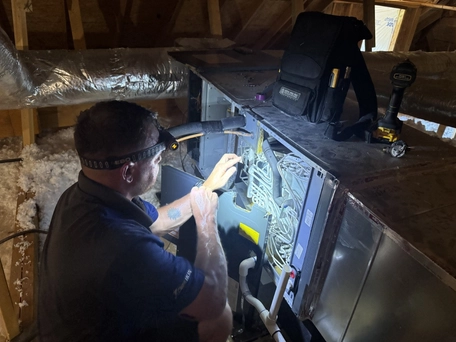
Look, most homes in the Jackson metro use a split system. Your furnace and your air conditioner share the same blower motor. So while your burners rest for eight months, that blower works all summer pushing cold air through your house.
That means a 15-year-old furnace can have a blower motor with the wear of a much older unit. When a tech checks your heating system in the fall, the blower is often the part that tells the real story.
Humidity, Dust, and Unwanted Guests
A furnace that sits idle through a humid summer can collect rust on burners and moisture around the flue. Dust settles on the flame sensor. Insects and mud daubers sometimes build nests in burner tubes or vent pipes.
None of this is a big deal if it’s caught early. But skip the fall check, and that first cold snap can turn into a no-heat call on the worst night of the year. Sound familiar?
What a Real Furnace Tune-Up Should Cover
Not every tune-up is the same. Some companies do a quick look, change the filter, and hand you a bill. That’s not real furnace maintenance. That’s a visit.
A thorough fall check looks at both safety and performance. At Climate Masters, our maintenance visits follow a detailed seasonal checklist so nothing gets skipped, whether it’s your first visit or your fifteenth. You can see what’s included on our HVAC maintenance agreements page.
The Safety Checks That Matter Most
The heat exchanger is the big one. It’s the metal wall that keeps burning gas separate from the air you breathe. Over time, heating and cooling cycles can cause cracks. A cracked heat exchanger can let carbon monoxide into your home.
A good tech will also test the flame, check gas pressure, make sure the flue is venting properly, and confirm safety switches work. These aren’t extras. They’re the reason maintenance exists.
The Performance Checks That Save Money
Next comes the stuff that affects your bills and comfort. That includes cleaning the flame sensor, checking the igniter, testing the blower motor’s amp draw, inspecting belts and wiring, and making sure your thermostat is talking to the system correctly.
Here’s what matters: a tech who measures these things can tell you if a part is slowly failing. That gives you time to plan, instead of panicking when it quits in January.
The Signs Your Furnace Is Nearing the End
You might feel overwhelmed trying to figure out if your furnace is “just old” or truly dying. It helps to know which signs are minor and which ones are serious.
Strange noises like squealing or rattling often point to a blower or belt issue. Those can usually be fixed. Short cycling, where the furnace turns on and off quickly, might be a dirty flame sensor or a bad thermostat. Also fixable.
But some signs are different. A yellow or flickering flame instead of a steady blue one can mean poor combustion. Rising gas bills with no change in your habits point to lost efficiency. And repeated repairs year after year usually mean the system as a whole is wearing out, not just one part.
The exception is the heat exchanger. If a crack is found on an older furnace, replacement is almost always the right call. Repairing a heat exchanger on an aging unit rarely makes financial sense, and safety comes first.
Repair or Replace? A Simple Way to Decide
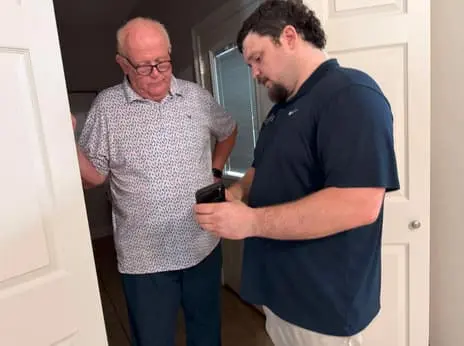
This is the question that keeps homeowners up at night. Nobody wants to be sold a new system they don’t need. But nobody wants to pour money into a furnace that’s about to die, either.
Want to know the secret? Use two quick rules together, then talk to a tech you trust.
The 50% Rule
If a repair costs more than half the price of a new furnace, replacing usually makes more sense. This is especially true once your system is past the middle of its expected life.
The $5,000 Rule
Multiply your furnace’s age by the repair cost. If the number is over $5,000, replacement is worth a serious look. So a $400 repair on a 15-year-old furnace equals $6,000. That’s a signal. A $150 repair on an 8-year-old furnace equals $1,200. Fix it and move on.
These rules aren’t perfect. They don’t account for safety issues or how long you plan to stay in your home. But they give you a fair starting point.
| Situation | Furnace Age | Typical Recommendation | Why |
|---|---|---|---|
| Dirty flame sensor or bad igniter | Any age | Repair | Low-cost parts, quick fix |
| Blower motor failure | Under 12 years | Repair | Motor swap extends useful life |
| Blower motor failure | 15+ years | Weigh both options | Other parts may soon follow |
| Control board failure | 15+ years | Lean toward replacing | Costly part on an aging system |
| Cracked heat exchanger | 12+ years | Replace | Safety risk; repair rarely worth it |
| Three or more repairs in two years | 12+ years | Replace | Pattern shows overall wear |
| Rising bills, uneven heat, no major failure | 15+ years | Plan a replacement | Efficiency loss adds up each year |
Table reflects general industry guidance. Your tech’s inspection of your specific system should drive the final decision.
Why “Just Replace It” Isn’t Always the Honest Answer
It’s frustrating when you call for a repair and the first thing you hear is a pitch for a new system. You start wondering if you’re being told the truth or being sold.
Here’s how we look at it. Gas furnaces often last 15 to 20 years, and sometimes longer in mild climates like ours when they’re cared for. A well-maintained 16-year-old furnace with a solid heat exchanger may have years left. A neglected 11-year-old furnace might not.
Age alone doesn’t decide it. Condition does. That’s why maintenance records matter so much. A tech who has seen your furnace every fall for years can spot changes that a stranger seeing it once never would.
That’s the whole idea behind how Climate Masters works. We’ve been taking care of heating and air systems across Central Mississippi since 1975. Some of our customers have been with us for more than 30 years. When one of our techs tells you to repair, it’s because repair makes sense. When we say it’s time to replace, we’ll show you why. You can read what longtime customers say on our reviews page.
What Furnace Maintenance Actually Saves You
Let’s be real. A tune-up costs money. So is it worth it on an old furnace you might replace anyway?
In most cases, yes. A clean, adjusted furnace burns gas more fully, which helps your monthly bills. It also puts less strain on parts like the blower and igniter. And catching small problems early often keeps a $150 fix from turning into a $1,500 one.
But here’s the biggest payoff: information. A fall inspection gives you a clear picture of where your furnace stands. That lets you plan a replacement on your own timeline instead of in an emergency. You’ll have time to compare options, look at financing options, and pick the right system without a cold house rushing you.
Don’t Forget Your Warranty
Many furnace manufacturers expect regular maintenance to keep a parts warranty valid. Skipping yearly service could put that coverage at risk. Keep your receipts and visit records in one place. If a covered part fails, you’ll be glad you did.
When a New Furnace Makes Sense
Sometimes the honest answer is that it’s time. And you know what? That can come with real relief. No more holding your breath every cold night. No more wondering if this is the repair that tips the scale.
If you’re heading toward replacement, make sure your contractor does a proper sizing check instead of just matching the old unit. Ask about efficiency ratings, warranty terms, and who will service the system after it’s installed. A great install from a company that disappears in three years doesn’t help you much.
You can learn more about the process on our furnace replacement page, or check current heating and cooling specials before you decide.
Frequently Asked Questions
How often should a gas furnace get maintenance in Mississippi?
Once a year, ideally in early fall before the first cold snap. Because your furnace sits idle most of the year, the fall visit clears out dust, moisture, and debris that build up over the summer. Pairing it with a spring AC check covers the shared blower, too.
Is furnace maintenance worth it on a 15-year-old furnace?
Yes, especially at that age. A tune-up checks the heat exchanger for cracks, which is the most important safety step on an older unit. It also helps you decide whether to repair or start planning a replacement, based on the furnace’s real condition instead of guesses.
Can I do furnace maintenance myself?
You can change your filter every one to three months and keep the area around the furnace clear. But gas pressure, combustion, heat exchanger inspections, and electrical checks need a trained tech with the right tools. Those are the checks that keep your family safe.
How long do gas furnaces last in Central Mississippi?
Many last 15 to 20 years, and some go longer with steady care. Our shorter heating season helps the burners, but the blower motor works year-round with your AC. Humidity can also cause rust. Regular maintenance is what pushes a furnace toward the long end of that range.
The Bottom Line: Make the Call With Facts, Not Fear
An aging furnace doesn’t have to be a source of dread. With yearly furnace maintenance, you’ll know what’s working, what’s wearing out, and what it’ll cost to keep going. Use the 50% and $5,000 rules as a starting point. Treat a cracked heat exchanger as a hard stop. And above all, trust condition over age.
The best decisions come from people who know your system. Climate Masters has been the heating-and-air team for Central Mississippi homes since 1975, and we’d be glad to be yours for the long haul. Schedule your fall furnace tune-up or call us at 601-939-9090. If something’s already wrong, our furnace repair team is ready to help.
Got a question about your own furnace? Leave a comment below, and we’ll give you a straight answer.